
Upstream Thinking
- Nov 18, 2025
- 2 min read
There’s a parable for upstream thinking and it goes a little like this:
Two friends are sitting by a river when suddenly they see a child drowning.
They react immediately, diving in and hauling the child to safety.
Just then another struggling child appears, so back in they jump to repeat the rescue.
Then another child appears, and another, and another…
Suddenly one of the friends jumps out and runs off.
The other friend keeps working away, rescuing child after child and getting angrier and angrier at their friend.
Then finally the flow of drowning kids abates and there no more children for the exhausted rescuer to save.
A few minutes later the first friend comes sauntering back.
“Where have you been!? I’ve been saving a frankly unbelievable amount of children all on my own here!”
And the friend replied, “I went to find out why all these children were falling in, found a broken safety barrier and fixed it.”
While the first friend was busy reacting to the symptoms of the problem the second friend solved the cause.
They were literally thinking upstream.
“How do I save drowning children?”
This is a downstream question.
Downstream thinking happens after the problem has already materialised.
Our brains are wired to react to immediate threats and issues, and our attention is extremely asymmetrical.
So we naturally prioritise thinking and acting downstream.
Downstream problems are direct, simple to measure and clear to manage, and it rewards us with clear, tangible results:
“I saved 5 children today.”
But what happens if you go upstream?
“How do we prevent children drowning in rivers?”
Upstream thinking is anticipating and preventing problems before they happen.
Humanity's unique ability is to plan for the future.
But it takes us considerable effort and focus.
And the outcomes are more nebulous, harder to measure and delayed.
So in a world of KPIs and targets, upstream thinking will often get pushed aside.
But the upsides can be significantly greater.
Working upstream
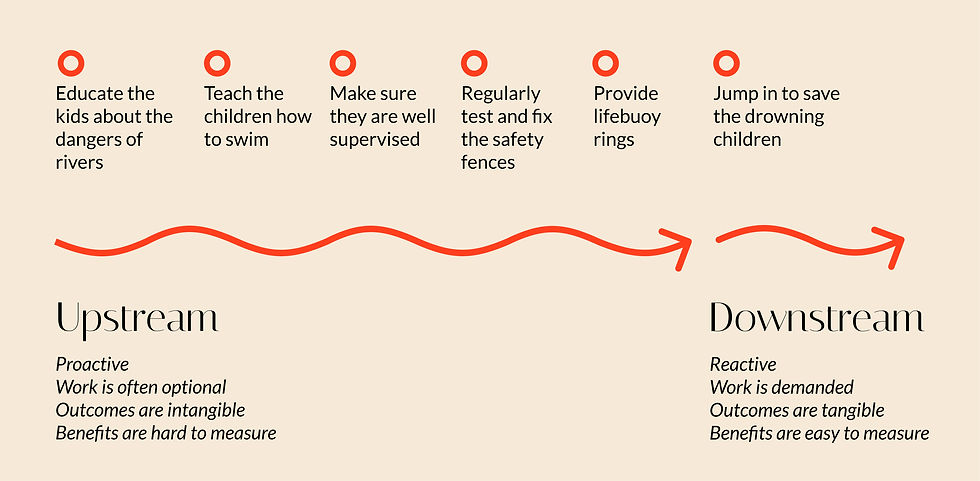
The river analogy is particularly useful, because there is not just a single solution to preventing issues, you can keep working upstream of the problem:
Immediately upstream, placing lifebuoy rings along rivers helps prevent drownings, before someone needs to risk their life jumping in.
A little further upstream, safety fences help, and a process of regular testing and replacing will prevent failures.
Making sure the children are well supervised in a potentially dangerous situation prevents the problem before anyone gets wet.
Teaching children how to swim will improve their chances of not drowning throughout their life.
Finally, a long way upstream, educating children about the dangers of playing at the edge of running water will help keep them safe before they can swim.
Thinking upstream, saves a lot more children in the long-term.
“My upstream thinking saved the lives of approximately 100ish children today…maybe.”
“Before I make a mistake, I don’t make that mistake” - Johan Cruyff


