
The 7-35-55 Rule
- Sep 18, 2025
- 2 min read
Think about the last time you had an argument.
What do you remember?
You’ll vividly recall the body language, where people were positioned, what their posture was, their hand actions and gestures.
You’ll remember the tone, the raised voices, the sarcasm and spite.
And you’ll remember a very small selection of the most hurtful things said.
What you won’t remember well is the majority of the words that were spoken.
When we think of communication we automatically think that the bulk of what happens is the wording, but in reality that’s just the smallest part.
Here’s an interesting test:
Start talking aloud about anything; what you did this morning, or the latest news.
How are you constructing those sentences?
Are you planning all the words out in detail before you talk?
Or, are they actually happening without your conscious mind even having time to register what is about to come out of your mouth?
It’s a strange experience.
Your conscious mind is directing the general gist of the message, but we speak faster than we can think logically, so most of the conversation is automated.
Most communication is conveyed is through body language or tone. The words themselves are only a fraction of what is taken in.
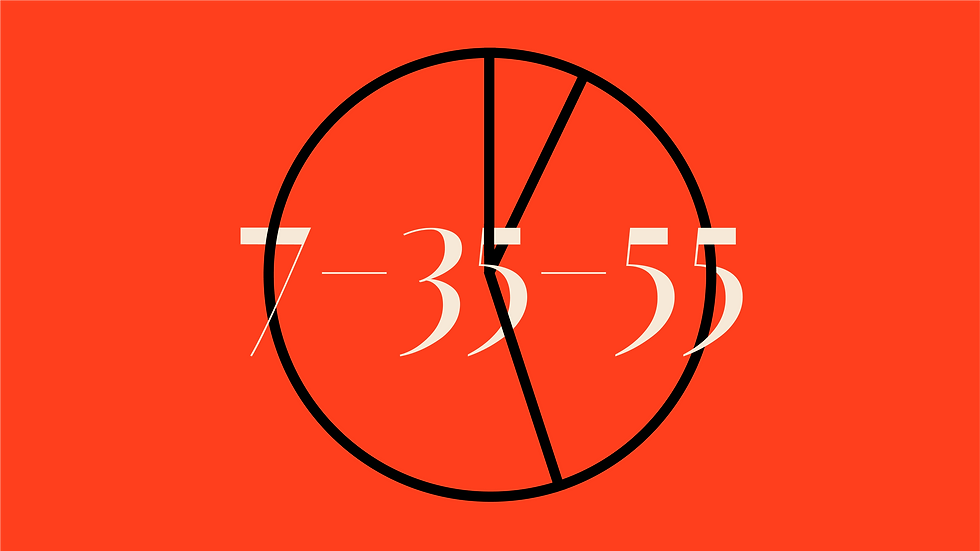
The 7-38-55 rule
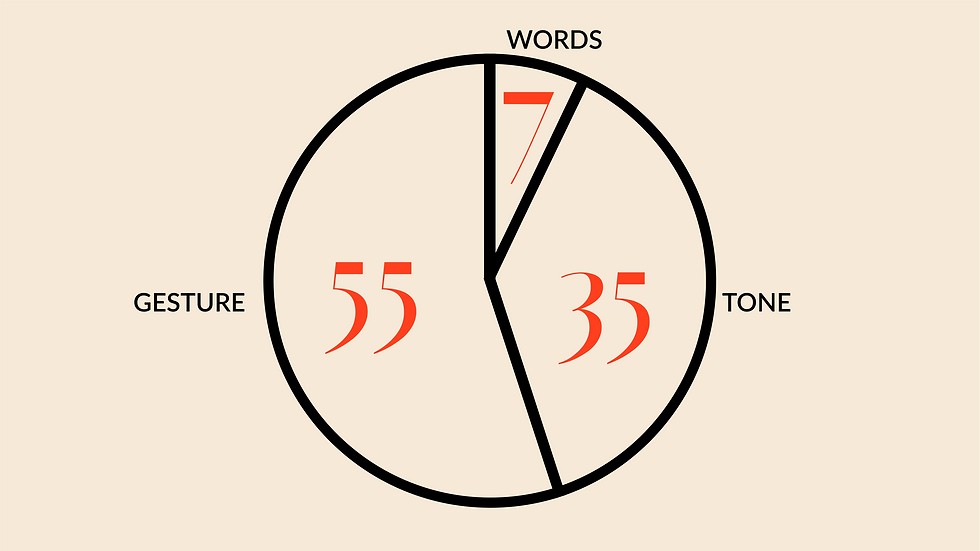
The 7-38-55 rule was developed by Albert Mehrabian at the University of California in his 1971.
He found that 55% of meaning is communicated through body language, 38% through tone of voice, and just 7% through spoken word.
It’s interesting to think about what this means for communicating in the world of remote working.
What happens to the quality of conversations when you start taking elements away?
If you’re on a video call you start losing some of the body language.
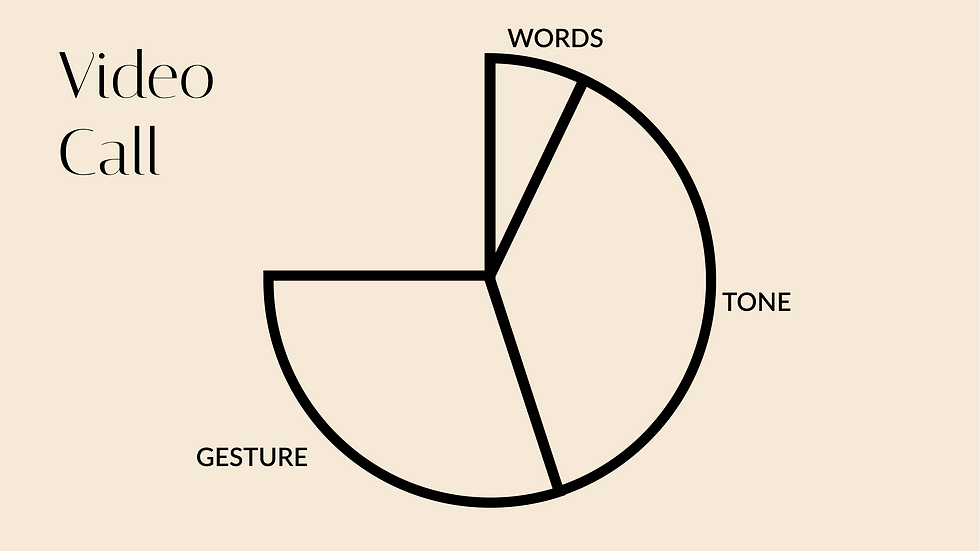
You lose some rapport building, subtle posture and hand gestures that would help indicate mood are hidden, there is less control of clothing and physical presentation, and there are more distractions so people struggle to pay attention.
Drop down to a telephone call and now you lose all body language.
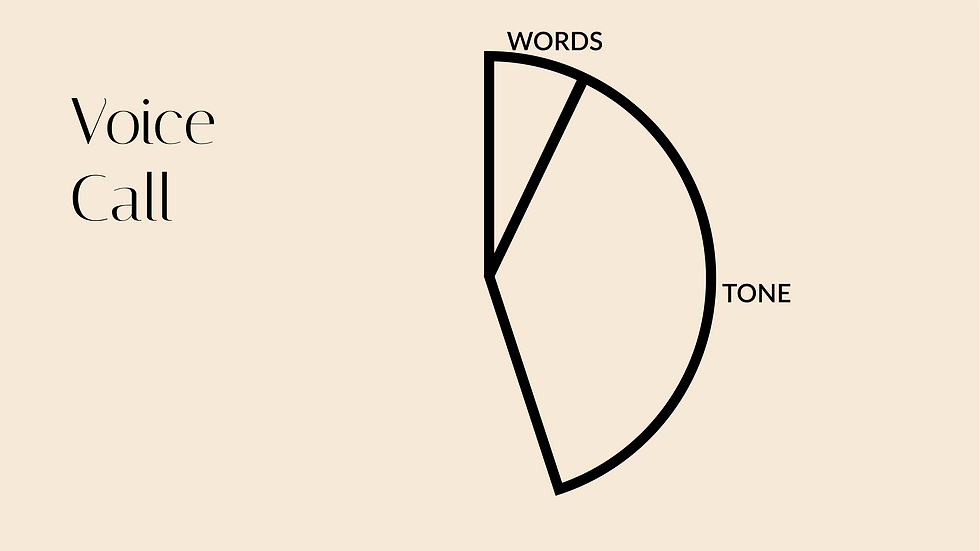
There is no control of the environment, the other person could be in a very distracting place, it becomes harder to convey meaning and you have to check back to see if they understand, and it’s very hard to sense if people are engaged or offended.
If your conversation is pared down to writing alone, you lose tone too.
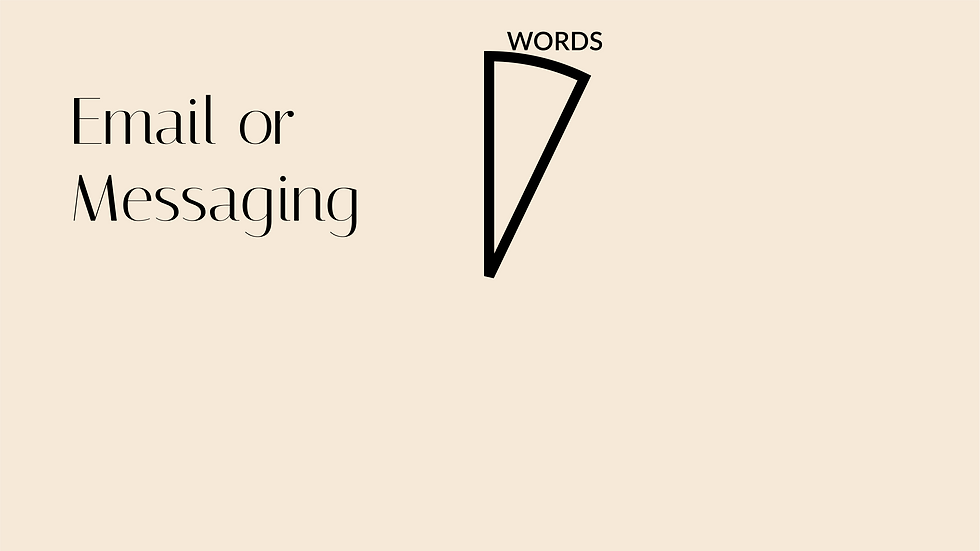
There is now little opportunity for feedback and lot of opportunity for misunderstanding (we all have examples where we have read an email and thought someone was acting one way, only to talk to them later and find out we had come to the entirely wrong conclusion).
How we can adapt
We have to always try to move the conversation up a level to improve communications.
Doing the simple or easy thing can often result in longer and less effective results.
The more important or urgent the situation, the more this matters.
We need to consider what we might be misinterpreting or how we could be misinterpreted.
Take the time to get it right and make things clear.
The less we experience the more we need to consider interpretations, use active listening and request feedback.


