Creative Principles
- Oct 14, 2025
- 3 min read
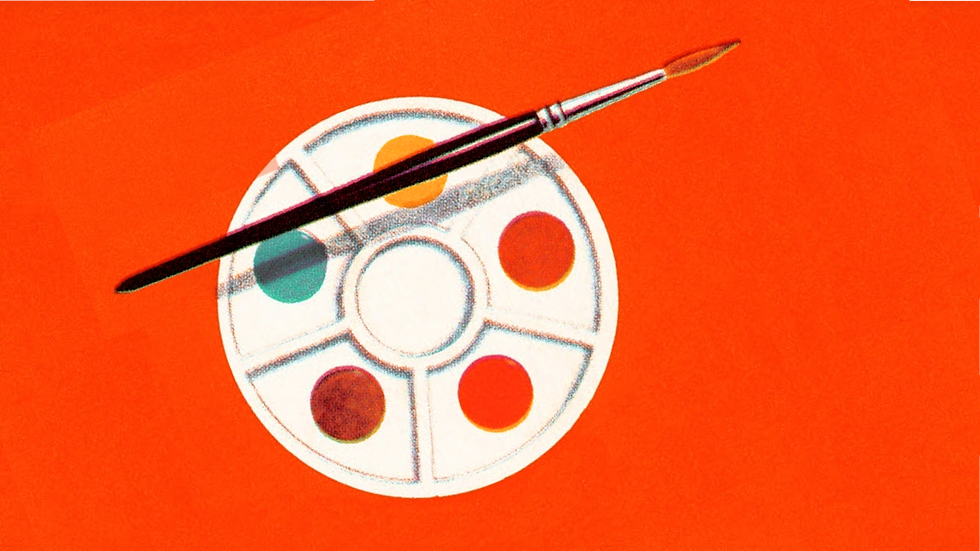
If you want to try to learn art where do you start?
Where I live there are two options for starter classes: watercolour painting or life drawing.
You couldn't pick two worse ways to start if you tried.
Art is a combination of two things, the medium (the material) and the subject.
Watercolours are one of the hardest mediums to master
You have to learn colour mixing, how the colours change when they dry, how to build up the layers of colour from light to dark, which brushes to use and which paper.
Then there's a lot of serendipity to manage as the paint flows across the painting depending on how much water you use, and how the layers overlap, so controlling tone is a challenge.
There's also very little ability to correct mistakes.
It takes a lot of practice to master the medium before you can really get going.
In comparison, something like pencil drawing is a much better place to start.
You can begin with a single colour, it's very controllable, you can pretty much use any paper and it's easy to correct.
You can start seeing good results straight away.
Life drawing is one of the hardest subjects to master
Human's have evolved to instantly recognise faces.
It means that drawing human faces is an incredibly unforgiving subject, as any wrong lines or shapes are immediately apparent.
Added complexity comes from the subtle shading needs for smooth organic shapes, the need to find a way to make that person look real and alive, and the difficultly of dealing with a moving subject.
At the other end of the scale is drawing something simple, or something static, or something much more forgiving of mistakes like a tree or a landscape.
Different artists are suited to different styles of art
At one end of the scale are draughtsman. They love control and accuracy They have the ability to produce accurate replications of things, using perspective, with recognisable anatomy, form and structure.
At the other end are serendipitous creatives. These are people that thrive on bold colours, free-flowing mediums, creative approaches, unique compositions and abstract subjects.
The people on either side of that scale really struggle when they attempt an art style that does not suit their natural ability.
Most artists can have a good stab at either end, but most non-artists are non-artists because they can't.
Art for Non-Artists
Watercolour painting or life drawing are good for artists looking to develop their skills, but for non-artists they are a non-starter.
Most art is taught by artists, who were themselves taught by artists.
So they are unaware that there is a problem for non-artists.
As a result, no one sits non-artists down to explain the fundamentals, so many people launch in, become disillusioned and fail.
If you are a non-artist looking to start, pick a simple medium, a simple subject and use a style that suits your strengths.
If you do that, you have a significantly better chance of sticking at it, experiencing tangible progression, and becoming an artist.
Challenges for Non-Artists
If you are starting any new challenge, whether it's art, a project, a job, or a business, you have to understand the foundations.
You may find that no one has done it before so you'll have to figure out the concepts from scratch.
You may find that the people already experienced in that challenge struggle to explain the concepts, so you can't just rely on them.
You will do best if you can adapt that challenge to suit your abilities and skills.
The important thing is to know that the first task you have is understanding the principles.
Understand the principles and you'll significantly increase your chance of success.
“It is not enough to do your best, you must know what to do, and then do your best." ― W. Edwards Deming


